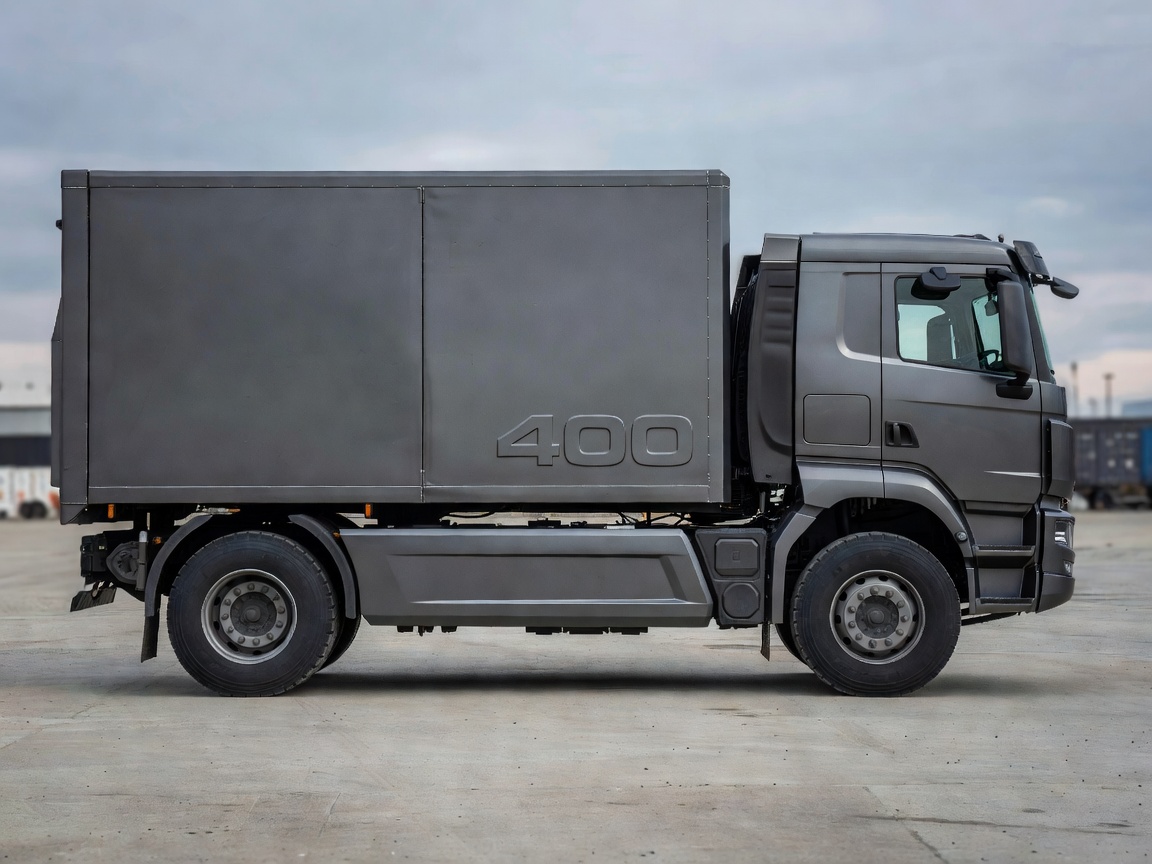
Heavy-Duty Commercial EVs: Defining the Zero-Emission Paradigm
The logistics industry is undergoing a systemic transformation. Historically, heavy-duty commercial vehicles—particularly Class 8 trucks—have been entirely dependent on diesel powertrains due to their immense energy density and rapid refueling times. However, advancements in electric vehicle (EV) architectures have made zero-emission freight a practical reality for specific routes and operations.
Redesigning the Powertrain
Transitioning from an internal combustion engine (ICE) to a battery electric vehicle (BEV) is not simply a matter of swapping a fuel tank for a battery pack. Heavy-duty EV trucks utilize integrated e-axles, which combine the electric motor, inverter, and transmission into a single compact unit directly on the driving axle. This integration reduces drivetrain power losses and frees up chassis space for larger battery arrays.
Furthermore, regenerative braking fundamentally alters the driving dynamic of a massive commercial truck. In traditional diesel setups, descending steep grades requires heavy reliance on compression release brakes and friction brakes, leading to substantial heat generation and component wear. Electric trucks capture kinetic energy during deceleration, converting it back into electrical energy stored in the battery. This vastly extends the lifespan of friction brakes and reclaims energy that would otherwise be lost as heat, boosting overall efficiency.
Payload vs. Range Considerations
One of the most persistent challenges in commercial EV adoption is the conflict between battery weight and maximum allowable vehicle weight limits. Batteries are heavy. A commercial EV pack capable of delivering 300 to 500 miles of range can weigh several tons. Because road networks enforce strict gross vehicle weight ratings (GVWR), every additional pound of battery translates directly to a pound of lost cargo payload capacity.
To offset this, regulatory bodies in various regions have introduced weight exemptions for zero-emission vehicles, allowing an additional 2,000 pounds (or equivalent metric allowances) to compensate for battery mass. Even with these exemptions, fleets must carefully profile their routes. A truck hauling light, voluminous goods (like packaged snacks or parcels) typically "cubes out" before it "weighs out," making battery weight less of an issue. Conversely, fleets hauling dense materials like steel or liquids must rigorously calculate the trade-offs.
Aerodynamics and Cab Design
Because energy storage on an EV is at a premium, aerodynamic drag reduction becomes critical. Many new commercial EVs eschew the traditional long-nose hood in favor of a sleek, cab-over or sloped-front design. Without a massive diesel engine sitting in front of the driver, designers have dramatically improved forward visibility, shrinking blind spots and increasing safety for pedestrians and smaller vehicles in urban settings.
Active aerodynamics, such as motorized grille shutters and side-skirt extensions that close gaps between the tractor and trailer, are standard. Mirrors are increasingly being replaced by digital camera systems to cut through the air more cleanly, yielding noticeable percentage gains in range at highway speeds.
Operational Shifts for Fleet Managers
Adopting heavy-duty EVs forces a complete re-evaluation of fleet dispatching. Diesel trucks operate on a "fuel when empty" model, utilizing public truck stops. EVs require sophisticated telematics and routing software to factor in ambient temperature, terrain elevation, load weight, and available charging infrastructure.
Currently, the sweet spot for heavy-duty electric trucks lies in regional haul and drayage operations. Drayage—moving shipping containers from ports to nearby distribution centers—is perfect for current technology limits. The routes are predictable, distances are relatively short (under 200 miles daily), and the trucks return to a central depot every night where they can charge slowly on Level 2 or moderate DC fast chargers.
While long-haul electric trucking over unpredictable cross-country routes remains challenging due to public infrastructure gaps, the operational cost benefits in closed-loop logistics are already proving superior to diesel equivalents.