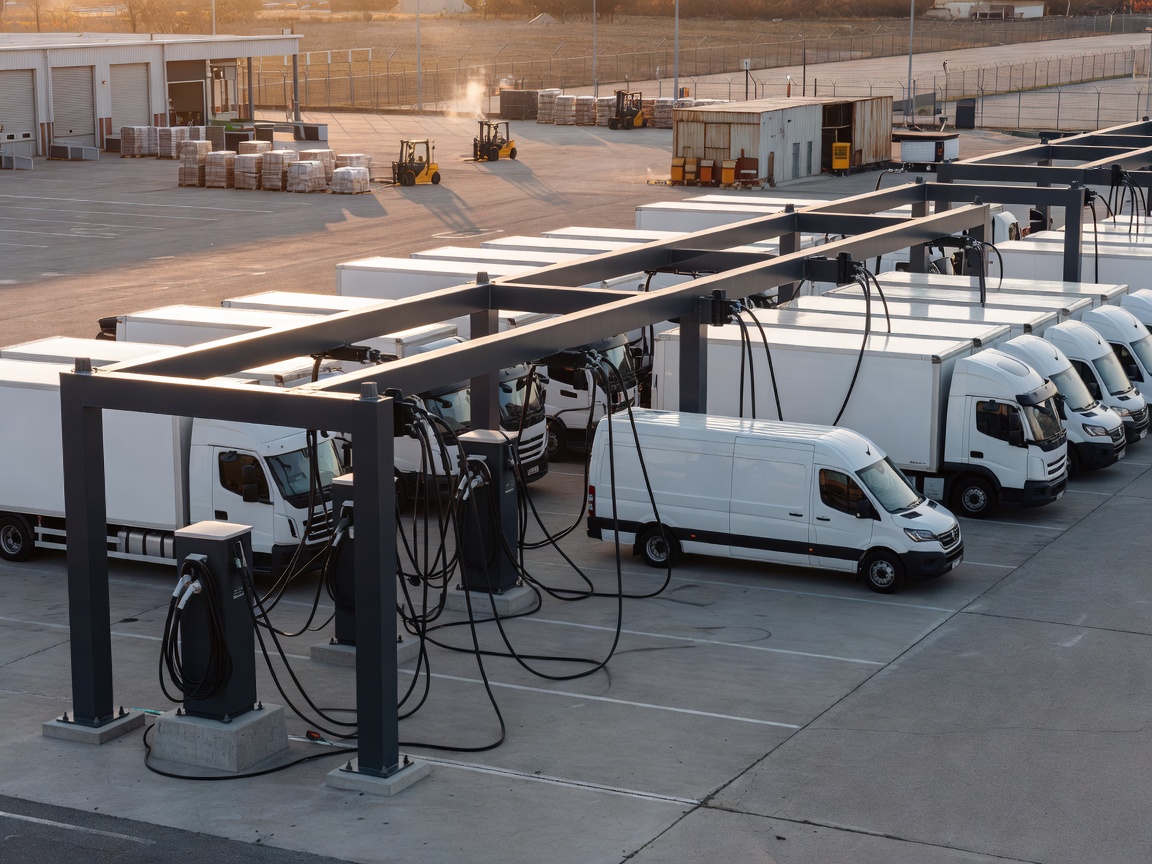
Infrastructure: Powering the Electric Fleet
The single greatest bottleneck to scaling electric commercial transport is not vehicle availability, but charging infrastructure. Installing chargers for a commercial fleet requires extensive grid evaluation, significant capital expenditure, and advanced software management to prevent crippling utility bills.
Depot Charging: The Foundation
For operations where vehicles return to a central base every night, depot charging is the foundational strategy. This model allows for reliable, slow-to-moderate charging speeds during off-peak hours.
Level 2 AC charging (up to 19.2 kW) is sufficient for smaller delivery vans left overnight. However, for Class 8 trucks with battery packs exceeding 500 kWh, overnight charging requires direct current (DC) fast chargers operating between 50 kW and 150 kW to guarantee a full charge before the morning shift.
Upgrading a depot to support dozens of DC fast chargers often exceeds the existing electrical capacity of the site. Fleet operators must engage with their local utility companies years in advance to negotiate trenching, transformer upgrades, and expanded substation capacity.
Smart Charging and Peak Shaving
Commercial electricity rates are heavily influenced by "demand charges"—fees based on the highest peak of electricity usage during a billing cycle. If twenty trucks plug into 150 kW chargers simultaneously, the resulting demand spike can wipe out any savings generated by avoiding diesel fuel.
To mitigate this, fleets employ smart charging software. This system communicates with the vehicles and the local grid, staggering charge times and dynamically adjusting power output. It ensures all trucks are adequately charged by their dispatch time while "shaving the peak" to keep utility costs manageable. Some depots also integrate stationary battery storage systems; these batteries charge slowly during the day and discharge rapidly to the trucks at night, buffering the grid connection.
En-Route Charging and the MCS Standard
For long-haul logistics, trucks must charge on the road. The existing Combined Charging System (CCS) standard, which maxes out around 350 kW, is too slow for commercial trucks. Charging a 600 kWh battery on a CCS plug would take multiple hours—unacceptable in an industry where time is closely regulated by hours-of-service laws.
The solution is the emerging Megawatt Charging System (MCS). Designed specifically for heavy-duty commercial vehicles, the MCS standard is engineered to deliver up to 3.75 megawatts of power. At these speeds, a massive Class 8 truck could theoretically replenish its battery during a driver's mandated 45-minute rest break.
The Grid Challenge
Deploying MCS stations along highway corridors presents monumental infrastructure challenges. A single charging hub with ten MCS dispensers requires roughly the same electrical capacity as a small town or heavy industrial plant. Building this infrastructure requires deep collaboration between governments, utility operators, and private charging networks to upgrade transmission lines and ensure grid stability.